

Quality Assurance
Rigorous testing for every chemical batch
Rigorous testing for every chemical batch

On-time delivery with stable production capacity

Expert engineering team for process solutions
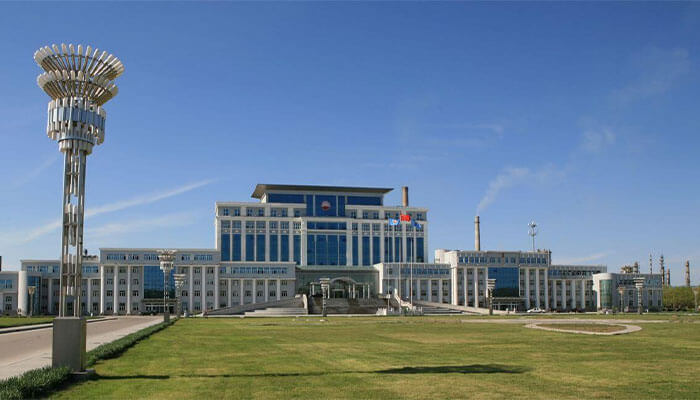
Multi-stage laboratory testing with ISO-certified processes for every production batch.
Bespoke chemical formulations and packaging options tailored to your unique specifications.
Integrated warehousing and transportation solutions ensuring safe, on-time global delivery.
Eco-friendly chemical alternatives and green manufacturing practices for a cleaner future.
We are committed to reducing environmental impact through green chemistry, energy efficiency, and sustainable manufacturing practices.

Quick answers to common questions about our products, quality, and services.
A: Fill out the online inquiry form in the 'Contact Us section or reach out to our sales team via email (sales7@ascent-chem.com) or phone (+8615371019725). We'll provide a customized quote promptly.
A: We accept bank transfers, major credit cards, and letters of credit. Standard orders are due within 30 days; custom projects' terms are negotiable.
A: Yes. Our R&D team of chemists and engineers can develop tailored products and services based on your specifications.
A: Yes. Contact customer service at least two weeks in advance to schedule a tour with safety briefings and guided visits.
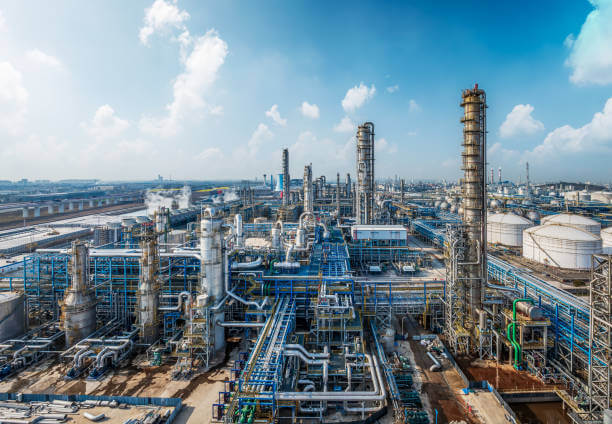
On August 31, the light hydrocarbon fractionation unit at Daqing Refining & Chemical Company’s Chemical Branch was humming with activity and operating at full capacity. Tanker trucks lined up in an orderly fashion, fully loaded with high-value-added cyclopentane products and ready for dispatch. This thriving production scene stands in stark contrast to the company's struggles just a year and a half ago. At that time, the Chemical Branch faced severe operational challenges due to adverse factors such as adjustments to consumption tax policies on stable light hydrocarbons and a precipitous market exit for strong-alkali surfactants. The company incurred a loss of 149 million yuan in 2024; although losses were reduced by 75% in 2025, the overall situation remained unresolved. Faced with these mounting pressures, the company’s management and staff refused to sit idly by. Instead, driven by a determination to succeed and the perseverance to see the task through, they launched a comprehensive effort to overcome obstacles and break through the impasse. They delivered impressive results for the first half of this year: a total chemical product output of 246,700 tons and total profits of 11.04 million yuan, successfully turning the business around from loss to profit.Confluence of three major shifts leaves established enterprises mired in crisis.Established in 2003, the chemical company had long thrived by anchoring its operations on three key industrial chains: natural gas chemicals, light hydrocarbon deep processing, and oilfield chemicals. However, in the past two years, this veteran enterprise has faced an unprecedented "cold snap" in its development. The first blow came from a sudden policy shift. On June 30, 2023, the state included stabilized light hydrocarbons in the scope of consumption tax levies, directly slashing the company's profits by 123 million yuan. Consequently, sales volume for stabilized light hydrocarbons plummeted from 124,900 tons in 2023 to 54,000 tons in 2024, drastically squeezing the profit margins of this core business. "The abrupt policy change put the company on the defensive," recalled Li Linghui. Market contraction followed close behind. Due to adjustments in the tertiary oil recovery development plan at the Daqing Oilfield, demand for strong-alkali surfactants nosedived from 61,500 tons in 2016 to just 3,700 tons in 2024. By April 2025, the product had completely exited the local Daqing Oilfield market, causing a sudden collapse of a core pillar business. "A flagship product we’d worked on for over a decade—gone just like that," lamented Liu Qingxin, manager of the Donghao branch. Internal restructuring introduced further uncertainty. In December 2023, management authority was officially transferred from Daqing Oilfield to Daqing Refining & Chemical Company, ushering in a period of major strategic adjustment. Post-restructuring, an investment "vacuum" emerged: no fixed-asset investment projects were launched from 2024 onwards. Meanwhile, production units had been in operation for an average of over 15 years, with an equipment newness coefficient of merely 0.21, leading to poor coordination and stalled progress across various operations. "Restructuring naturally breeds anxiety, and combined with persistent losses, many employees worried about their jobs and incomes," admitted Li Bo, the chemical company's deputy general manager, noting that the crisis had placed the company's very survival in jeopardy.Implementing a multi-pronged approach, the entire workforce unites to revitalize the business against the headwinds.The immense pressure of heavy losses ignited a collective determination to survive and break through the crisis. In early 2024, the chemical company’s Party committee issued a firm mandate: "reduce losses in one year, turn a profit in two, and achieve high-quality development in five." Through a breakthrough in mindset, structural reform, and targeted measures, they launched an all-out campaign to reverse losses. To break free from mental constraints, the company’s leadership team went directly to the front lines, regularly conducting "great discussions on emancipating the mind." By laying out financial figures and development challenges for all employees to see, they clearly conveyed a survival philosophy: "If the enterprise does not eliminate losses, losses will eliminate the enterprise." This shift in mindset drove organizational restructuring. Sixty-one frontline leaders were appointed to new roles, and the proportion of young and middle-aged cadres rose from 38% to 52%. Third-tier organizational units were reduced by over 60%, and a flattened management structure significantly boosted decision-making efficiency. Frontline employee wages increased by more than 7%, turning the principle of "more pay for more work" into reality. Advancing on three fronts, the company sought to maximize efficiency in every aspect of operations. On the raw material front, the company ensured its processing units never went "hungry." Dedicated teams acted like "night watchmen," keeping a close eye on pipeline network pressures and tank inventory data. In 2025, light hydrocarbon feedstock processing exceeded 320,000 tons; natural gas consumption surpassed 190 million standard cubic meters, and—for the first time—169,000 standard cubic meters of bio-natural gas were introduced. On the production front, the company aimed to extract maximum value from every ton of raw material. Cross-unit expert teams were formed to tackle and resolve over 20 core technical challenges. "After optimizing parameters, the comprehensive yield of light hydrocarbons rose by 1.66%, saving 5,460 tons of raw material annually and boosting efficiency by 21.5 million yuan," said Ming Jingxin, head of the fifth operations shift at the light hydrocarbon fractionation workshop. "We also saved over 6.72 million standard cubic meters of natural gas throughout the year." On the sales front, the focus was on securing good prices for quality products. "We used to sell whatever we produced; now, we produce whatever the market demands," says Zhang Fan, Deputy Manager of the Chemical Company’s sales branch. For instance, the company optimized its n-hexane product grades and established a mutual supply channel with Jilin Petrochemical, generating over 29 million yuan in added value. It also precisely timed price adjustments for cyclopentane, securing the best selling price seen in nearly five years. On the management front, the company implemented meticulous cost control. It innovatively introduced a "three-dimensional budget model" that quantified 28 key indicators—such as production volume, sales volume, and pricing—and assigned specific responsibilities to departments and individuals. This initiative successfully reduced maintenance and repair costs by 33% and technical service fees by 54%. While frontline production teams focused on stabilizing output and generating value, support departments proactively transformed their operations to contribute to profitability by taking on outsourced tasks such as external construction projects and vehicle maintenance services. Today, the Chemical Company fosters an environment where "everyone is a driver of profitability, and every area is a battleground for value creation."Deeply cultivating the green industry, expanding horizons and transforming to forge a path of new strength.For the chemical company, turning a profit in the first half of the year represents only a milestone; the long-term goals are transformation, upgrading, and the enhancement of quality and efficiency. Building on this new starting point, the company is focusing on green transformation, industrial upgrading, and market expansion to continuously solidify its foundation for growth. The company has seized a first-mover advantage in the industry through green development. It successfully secured dual ISCC EU certification for producing green methanol and green liquid ammonia from biomethane—becoming the first domestic enterprise to achieve this qualification and effectively obtaining a "passport" for entry into the European market. The first batch of biomass-based green methanol has already been sold and loaded, establishing a complete end-to-end process covering production, sales, and export. Regarding emerging industries, the company is on the verge of industrial-scale production for a core new product: an interfacial-steric-hindrance alkali-free surfactant, which field trials have shown can boost oil recovery rates by over 19%. A demonstration project for biomethane production (with a capacity of 20 million standard cubic meters per year) has passed its preliminary review, and a feasibility study for a 30,000-ton-per-year waste plastic recycling project has been completed, marking the gradual formation of a green circular industrial ecosystem. In overseas markets, the company continues to advance its international footprint. It successfully supplied 627 tons of polymer products to the Rokan oilfield in Indonesia and is steadily progressing with a demulsifier project for the Missan oilfield in Iraq, gradually achieving the simultaneous export of products, technologies, and standards. The heavy burden of past losses once made the journey arduous for the company’s management and staff. Today, as operational quality and efficiency steadily improve, that burden is being shed bit by bit. Through repeated efforts to overcome challenges, confidence in the future has coalesced into a shared conviction: as long as the direction is right and the pace is steady, there is a bright future for development and hope for the days ahead.
Read More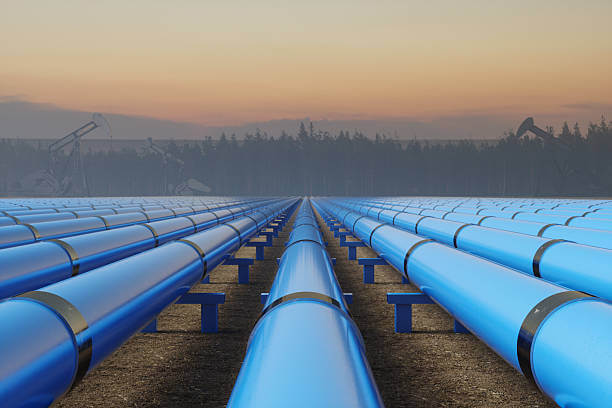
On July 7, it was reported that Daqing Refining & Chemical Company shipped a total of 129,100 tons of marine fuel oil in the first half of the year—a year-on-year increase of 22.6% and a record high for the period. "We keep a close eye on market trends and fluctuations in raw material properties, focusing our efforts on precision control," said Lang Jiajun, a process engineer in the Production Technology Group of the Storage and Transportation Department. Adhering to a market-oriented and efficiency-centered approach, the company deepened dynamic analysis of key indicators and precisely adjusted the blending ratios of component oils, achieving a 100% success rate for on-spec blending on the first attempt across major production units. Notably, the product's sulfur content was consistently controlled below 0.3%, far surpassing the International Maritime Organization's (IMO) 0.5% sulfur limit for marine fuel. Leveraging scientific production coordination and rigorous quality control, the company has maintained steady marine fuel output and strong growth momentum in both production and sales. Since March, monthly shipments have grown by over 60% month-on-month, continuously enhancing delivery capabilities. Faced with rising output and an increased loading workload, the company precisely coordinated on-site operations and optimized team staffing. Dedicated process and equipment management personnel were assigned to oversee production process control and equipment maintenance, thereby solidifying the foundation for safety. By efficiently allocating vehicles and reducing loading times, the company streamlined the entire process—from oil transfer to loading and shipment—ensuring the safe and smooth dispatch of marine fuel products and continuously empowering the company's high-quality development.
Read More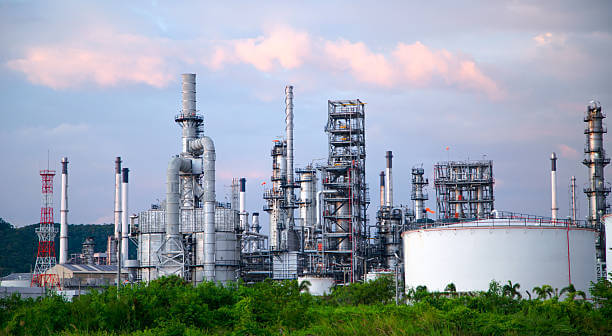
On March 17, construction officially commenced on Daqing Refining & Chemical Company’s 100,000-ton/year polyacrylamide project. This initiative represents a key move by the company to align with the Group’s "biomanufacturing" special action plan and to establish itself as a "product giant" in the field of oilfield chemicals. It holds significant importance for ensuring national energy security, supporting the development of the "centennial oilfield," and driving regional economic growth. The project entails the construction of a new 80,000-ton/year acrylamide unit and a 100,000-ton/year polyacrylamide unit, alongside an upgrade to the existing ammonium sulfate unit, increasing its capacity from 15,000 to 35,000 tons per year. With nearly three decades of experience in polyacrylamide production, Daqing Refining & Chemical possesses a solid technical and industrial foundation. The company has developed a diversified portfolio of over ten product models—including anionic and cationic types—featuring proprietary intellectual property. These products have successfully entered markets at major oilfields such as Dagang, Jidong, and Xinjiang, and have even expanded internationally into the Indonesian market. This project marks a concrete step toward leveraging the company's unique strengths, optimizing its industrial layout, and consolidating its leading position in the industry. The project is reportedly scheduled for substantial completion by the end of this year. Once operational, Daqing Refining & Chemical’s polyacrylamide production capacity will surge to 250,000 tons per year. This expansion will result in a more comprehensive product range, creating a diversified production system that spans everything from basic enhanced oil recovery (EOR) agents to high-end, customized products, thereby fully meeting the varied needs of tertiary oil recovery operations.
Read More


